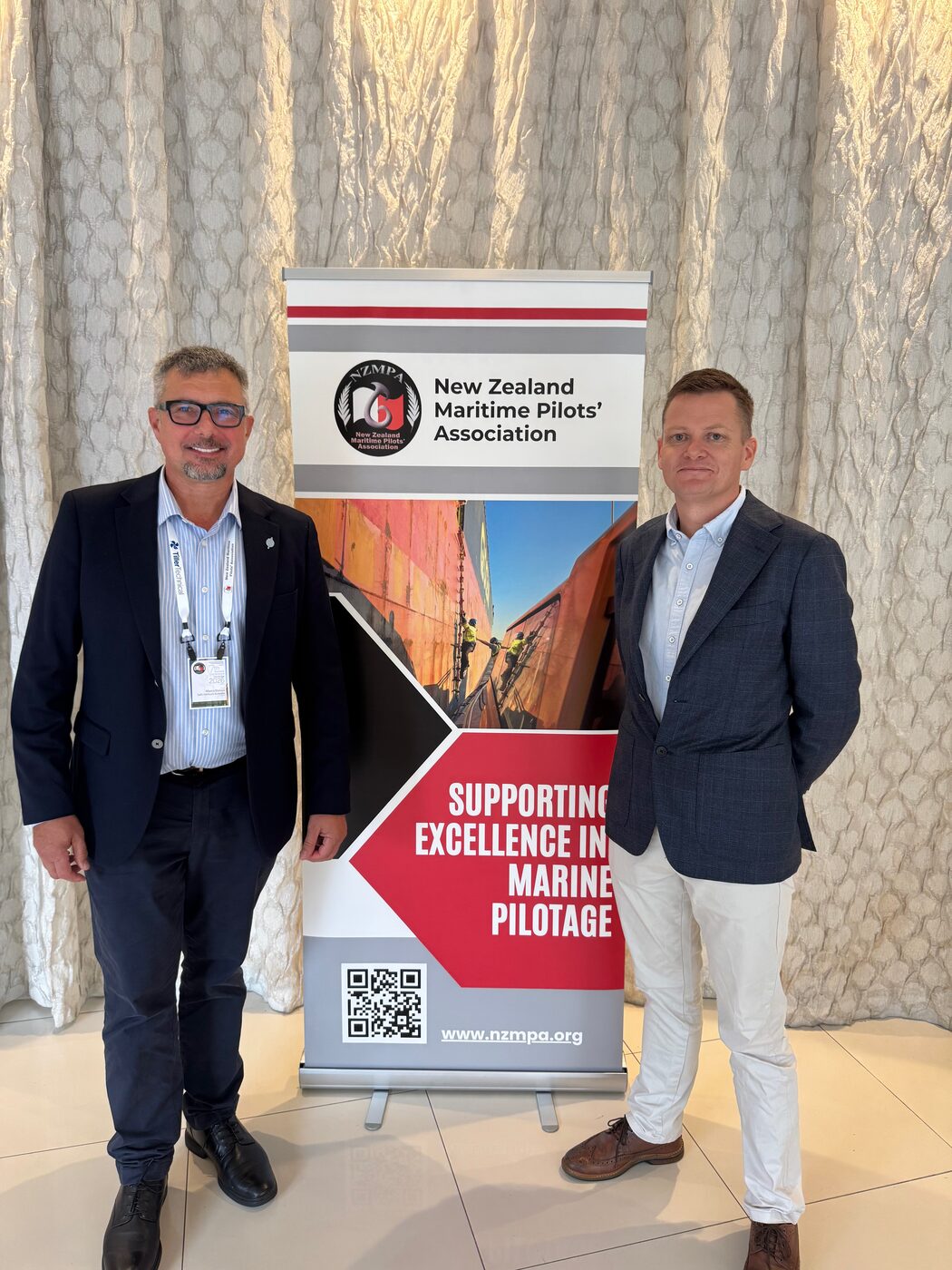
There is something clarifying about presenting to a room full of people who have faced the same bridge environments you have, and who will see through anything that does not hold up operationally.
The invitation from the NZMPA was to present on building psychological safety in bridge teams. The full title was Building High Trust Performance through Integrity, Competence and Care. I want to be clear about what that is and what it is not, because the phrase gets misused regularly in professional circles.
Psychological safety is not about just being nice
The presentation opened with a simple premise: maritime incidents rarely happen because nobody saw the problem. They happen because someone saw it and did not speak up. That is a different kind of failure, and it requires a different kind of response.
The session examined what produces that silence. Authority gradient is part of it. The structure of bridge teams, built around rank and command, creates conditions where the cost of speaking up can feel higher than the cost of staying quiet. When that happens, information stops flowing upward at precisely the moment it is most needed.
Psychological safety, as the research defines it, is not about comfort or the removal of standards. It is about lowering the interpersonal cost of raising a concern. High-performing teams are not teams that make fewer errors. They are teams that surface errors earlier, because people believe their input will be heard rather than dismissed.
That distinction matters on the bridge. It matters in the tug briefing. It matters in the Master-Pilot Exchange, which was a central focus of the practical section of the presentation.
What the session explored
The presentation drew on frameworks from Dr Amy Edmondson’s research at Harvard and Dr Timothy Clark’s four-stage model of team trust, applied directly to maritime operational contexts. A detailed case study of the Costa Concordia grounding examined how the absence of these conditions contributed to catastrophic outcomes, tracing the failure of challenge and response across the final 10 minutes before impact.
The practical half of the session focused on what pilots can do within the time they have on any given bridge. Safe Harbours’ position is that the Master-Pilot Exchange (MPX) is one of the most underused leadership tools in a pilot’s repertoire. The difference between a briefing that covers the passage plan and one that actively creates the conditions for a team to challenge is not procedural. It is behavioural, and it is learnable.
Three specific behaviours were examined:
- Framing the work so that reporting thresholds are explicit
- Inviting challenge directly from each team member
- Responding visibly and positively when someone speaks up
None of these requires additional time. All of them require deliberate intent.
The conversation that followed
The discussion with NZMPA delegates was substantive. Questions touched on the tension between authority and openness, the role of cultural background in shaping willingness to speak up, and whether these approaches hold in the compressed timeframes of a complex manoeuvre. Those are the right questions, and they are exactly what Safe Harbours’ facilitators work through with bridge teams in our Bridge Team Management programme.
Safe Harbours is grateful to the NZMPA and its leadership for the invitation to contribute to this conversation. Human factors in bridge team operations deserves exactly this kind of direct, practitioner-level discussion, and the New Zealand pilotage community brings the operational credibility and professional honesty that makes it worthwhile. We look forward to continuing the engagement.
Putting it into practice
Psychological safety is not a one-day concept. Safe Harbours’ Bridge Team Management programme embeds it as a core module across a structured three-day delivery combining classroom, case study, and full-mission simulator work. Participants do not just discuss how high-trust teams operate; they practise building one, under time pressure, in realistic scenarios, threading the modern human factors science of team performance through a practical and operational bridge resource management framework.
For ports and shipping companies looking to build that capability into their teams, this is where the conversation moves from principle to practice.